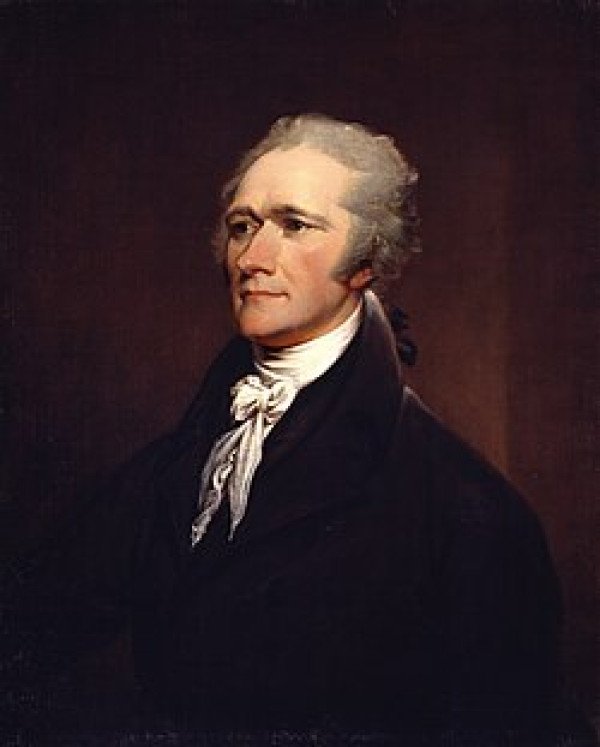
 Scottish influence on the American Revolution and the founding of the United States was profound, with deep ties to the Declaration of Independence and key figures like Alexander Hamilton.
Alexander Hamilton's Links to Scotland
Scottish Descent: Alexander Hamilton was of Scottish descent; his father, James Hamilton, was the son of a Laird from Ayrshire, Scotland."Scottish Peddler" Remark: Second U.S. President John Adams famously referred to Hamilton as the "bastard brat of a Scottish peddler".
Influence of Thought: Hamilton, along with other founders, was heavily influenced by the Scottish Enlightenment, and many of his teachers were Scots.
Career: While born in the West Indies, Hamilton's Scottish heritage is a key part of his background, as he went on to become the first U.S. Secretary of the Treasury.
Early life and education
Hamilton was born on January 11, 1755, or 1757, in Charlestown, the capital of Nevis in the British Leeward Islands, where he spent his childhood. Hamilton and his older brother, James Jr., were born out of wedlock to Rachel Lavien (née Faucette), a married woman of half-British and half-Huguenot descent, and James A. Hamilton, a Scotsman and the fourth son of Alexander Hamilton, the laird of Grange, Ayrshire. His maternal grandfather was John Faucette (born c. 1680–1684), a French Huguenot, planter and medical doctor born in the Saintonge province of France who had settled on the British west indies island of Nevis, after the 1685 Revocation of the Edict of Nantes by Louis XIV.
Prior to Alexander's birth, in 1745, Rachel Lavien married Johann Lavien in Saint Croix. Together, they had one son, Peter. However, Rachel Lavien left her husband and first son in 1750, traveling to Saint Kitts, where she met James Hamilton. Hamilton and Lavien moved together to Nevis, her birthplace, where she had inherited a seaside lot in town from her father. While their mother was living, Alexander and James Jr. received individual tutoring and classes in a private school led by a Jewish headmistress. Alexander supplemented his education with a family library of 34 books.
James Hamilton later abandoned Rachel Lavien and their two sons, ostensibly to "spare her a charge of bigamy, after finding out that her first husband intended to divorce her under Danish law on grounds of adultery and desertion." Lavien then moved with their two children back to Saint Croix, where she supported them by managing a small store in Christiansted. Both his mother and Hamilton contracted yellow fever. On February 19, 1768, Hamilton's mother died from the disease, leaving him orphaned.
In probate court, Lavien's "first husband seized her estate" and obtained the few valuables that she had owned, including some household silver. Many items were auctioned off, and a friend purchased the family's books, returning them to Hamilton.
The brothers were briefly taken in by their cousin Peter Lytton. However, Lytton took his own life in July 1769, leaving his property to his mistress and their son, and the propertyless Hamilton brothers were subsequently separated. James Jr. apprenticed with a local carpenter, while Alexander was given a home by Thomas Stevens, a merchant from Nevis.