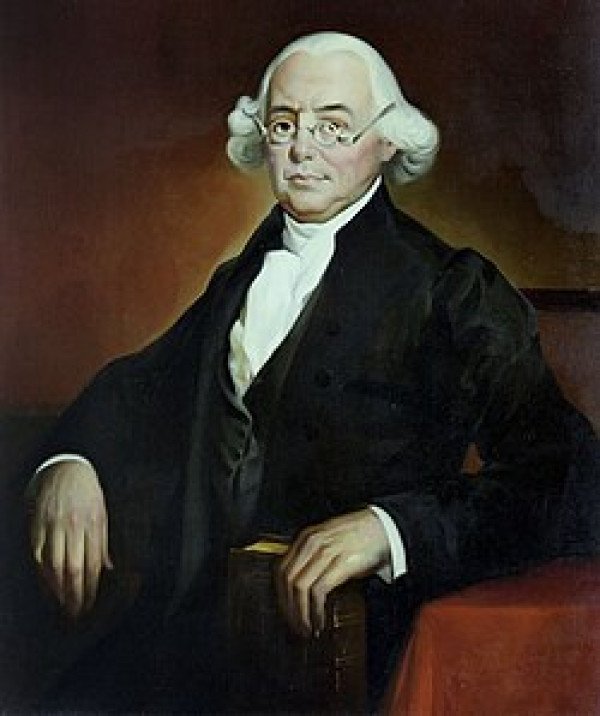
 James Wilson (1742–1798), a key signer of the U.S. Declaration of Independence, was born in Carskerdo, Fife, Scotland, and immigrated to Pennsylvania in 1765. A leading legal scholar and Enlightenment thinker, Wilson was educated at the Scottish universities of St Andrews, Glasgow, and Edinburgh. His Scottish upbringing profoundly influenced his advocacy for American independence.
Key Links to Scotland:
Birthplace and Education: Wilson was born on a farm near St. Andrews and received a prestigious education, attending the University of St Andrews at age 15, followed by Glasgow and Edinburgh.
Scottish Enlightenment Influence: Wilson was deeply influenced by Scottish Enlightenment thinkers, including Thomas Reid, Francis Hutcheson, and Adam Smith, which shaped his legal and political philosophy.
Immigration: He immigrated to America in 1765, settling in Philadelphia, where he became a prominent lawyer and legal scholar.
Signer Status: Wilson was one of only six people to sign both the Declaration of Independence and the U.S. Constitution.
Connection to Other Scottish Signers: He worked closely with other Scottish-born leaders, including the Reverend John Witherspoon. Wilson was a strong proponent of the idea that Americans were "one people" and that the colonies should be independent of British rule.
He became one of the first Associate Justices of the United States Supreme Court.
|
Area of Influence |
Wilson's Key Contributions |
|---|---|
|
The Presidency |
He was the primary "architect" of the Executive Branch. He fought for a single president (unitary executive) when others wanted a committee, and he proposed the Electoral College. |
|
Popular Sovereignty |
He was the most radical democrat of the group. He insisted the government should derive its power directly from "the People," not the state governments. |
|
The Preamble |
As a member of the Committee of Detail, he is credited with changing the preamble from a list of states (e.g., "We the people of the states of New Hampshire, Massachusetts...") to the iconic "We the People of the United States." |
|
Judicial Power |
He laid the groundwork for judicial review, the idea that the Supreme Court can declare laws unconstitutional, before it was officially established by John Marshall. |