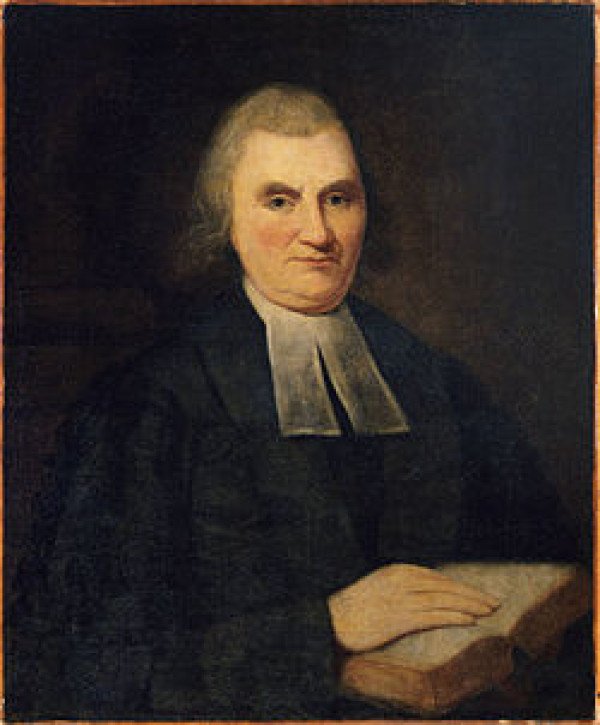
 John Witherspoon was a powerhouse of the 18th century—a man who lived at the intersection of "The Kirk" (the Scottish Church) and the birth of a new nation. He is the only active clergyman to sign the American Declaration of Independence, essentially transplanting the intellectual rigor of the Scottish Enlightenment into the soil of American democracy.
Early Life and Scottish Roots (1723–1768)
Born on February 5, 1723, in Gifford, East Lothian, Witherspoon was the son of a Presbyterian minister. He was a child prodigy, entering the University of Edinburgh at just 14 years old.
-
The Ministry: After earning his Master of Arts and a Doctorate in Divinity, he was ordained at Beith and later moved to the Laigh Kirk in Paisley.
-
The "Popular Party" Leader: In Scotland, Witherspoon became a firebrand leader of the "Popular Party" within the Church of Scotland. He fought against the "Moderates," whom he felt were too cozy with the aristocracy and too lax in their theology.
-
The Intellectual Satirist: He wrote Ecclesiastical Characteristics (1753), a biting satire of the church hierarchy that made him famous (and a few enemies) across Britain.
The Move to America (1768)
In 1766, a young Benjamin Rush and Richard Stockton (both future signers of the Declaration) visited Scotland to recruit Witherspoon. They wanted him to lead the struggling College of New Jersey (now Princeton University).
Initially, his wife Elizabeth was terrified of the sea voyage, but after two years of persuasion, the family emigrated. Witherspoon arrived in Princeton in August 1768, instantly transforming the college from a provincial school into a world-class training ground for revolutionaries.
The "Teacher of the Revolution"
Witherspoon’s greatest impact wasn't just his own signature, but the minds he molded. He introduced the Scottish Common Sense Philosophy, which argued that humans have an innate moral sense and the ability to understand the world through reason—ideals that underpin the U.S. Constitution.
His "Alumni Association" is staggering:
-
1 President: James Madison (who stayed an extra year to study Hebrew and political philosophy under Witherspoon).
-
1 Vice President: Aaron Burr.
-
12 Members of the Continental Congress.
-
37 Judges (including three Supreme Court Justices).
-
28 Senators and 49 Congressmen.
Political Activism and the Declaration
As tensions with Britain escalated, Witherspoon abandoned his initial neutrality. He argued that the colonies were not rebelling against the King, but rather the King had "abdicated" his duty to protect their natural rights.
-
New Jersey Representative: In 1776, he was elected to the Continental Congress.
-
The Great Quote: When a fellow delegate argued that America was not yet "ripe" for independence, Witherspoon famously replied:
"In my judgment, sir, we are not only ripe, but rotten for the want of it!"
-
The Signing: On August 2, 1776, he placed his name on the Declaration, the only minister to do so. He saw the American Revolution as a "sacred cause" for both civil and religious liberty.
The War Years and Final Days
The war was personal for Witherspoon. He lost his son, James, at the Battle of Germantown. Princeton’s campus was occupied and damaged by British troops (who burned his library), and he spent years tirelessly raising funds to rebuild the institution.
After the war, he served in the New Jersey Ratifying Convention for the U.S. Constitution and played a primary role in organizing the Presbyterian Church in the United States.
Witherspoon died on November 15, 1794, at his farm "Tusculum" near Princeton. He was blind in his final years but remained sharp-witted until the end.
Legacy Summary
Witherspoon bridged the gap between faith and reason. He proved that a deeply religious man could also be a champion of the Enlightenment, arguing that "a republic must either be virtuous or it will be short-lived."
To understand how John Witherspoon’s Scottish Enlightenment background directly shaped the U.S. Constitution, we have to look at the transition from theology to political science.
Under Witherspoon, Princeton became a "laboratory" for these ideas. Here is how his specific teachings—rooted in the Scottish "Common Sense" school—translated into the actual framework of the American government.
The "Common Sense" Bridge
Witherspoon taught his students (including James Madison) that human nature was consistent and predictable. He moved away from the idea that "only the elect" could understand truth, arguing instead that all men possess a "moral sense."
| Witherspoon’s Teaching | Constitutional Outcome |
| Total Depravity: The belief that humans are inherently flawed and prone to corruption. | Checks and Balances: Because no one can be trusted with total power, the government must be divided into three branches to "restrain" one another. |
| Federalism: The Presbyterian model of local "Kirk Sessions" reporting to a national "General Assembly." | The Federal System: Power is shared between individual States and a central National Government. |
| Religious Liberty: The "Free Exercise" of religion is a natural right, not a gift from the state. | The First Amendment: "Congress shall make no law respecting an establishment of religion, or prohibiting the free exercise thereof." |
Witherspoon vs. The Constitution: A Direct Comparison
1. The Nature of Factions
In his lectures, Witherspoon argued that in a large republic, many different interests (factions) would prevent any one group from becoming a tyrant.
-
The Result: This became the core argument of Federalist No. 10, written by his student James Madison. Madison argued that a "multiplicity of sects" (religious and political) was the best way to protect liberty.
2. The Social Contract
Witherspoon taught that the relationship between a ruler and the people was a covenant (a term used in Scottish Church history). If the ruler breaks the covenant, the people are legally and morally obligated to replace them.
-
The Result: This provided the "legal" justification for the Revolution and the subsequent creation of a government "by the people."
3. Separation of Powers
The Presbyterian church structure that Witherspoon championed in Ayrshire and Paisley was essentially a representative democracy. It featured:
-
Elected elders (Legislative)
-
A moderator (Executive)
-
Church courts (Judicial)
The "James Madison" Connection
It is impossible to overstate this: James Madison spent five years under Witherspoon's roof. While Thomas Jefferson (who was more influenced by French radicalism) wrote the Declaration, it was Madison (the student of the Scot) who wrote the Constitution.
Witherspoon gave Madison the "intellectual toolkit" to build a government that didn't rely on the "goodness" of leaders, but on a system that worked even if the leaders were "bad." As Madison famously wrote: "If men were angels, no government would be necessary." This is pure Witherspoon.